Macro Tracking for Beginners: A Simple How To Guide

If you’ve ever felt overwhelmed trying to eat healthy, lose weight, or build muscle, macro tracking for beginners might be the missing piece that finally brings it all together. It’s not a diet — it’s a strategy. And when done right, it becomes one of the easiest and most flexible ways to hit your health goals without feeling restricted.
Whether you’re aiming for fat loss, muscle gain, or just better energy levels, this beginner’s guide to macro tracking will break it down step by step.
This post may contain affiliate links in which I receive a small commission at no cost to you.
What Is Macro Tracking?
Macro tracking is the practice of logging how many macronutrients — protein, carbohydrates, and fats — you eat each day. These macros are the nutrients that give your body energy (aka calories), and they each play a crucial role in how your body looks, feels, and functions:
- Protein helps with muscle repair, metabolism, and satiety
- Carbs provide quick energy and support brain function
- Fats regulate hormones and help absorb essential vitamins
Every food you eat contains a mix of these macros. Tracking them gives you a customized, data-backed approach to eating that aligns with your goals, activity level, and food preferences.
Related: What are macronutrients for a deeper dive into each one of these macros.
Why Should You Track Macros?
If you’ve tried calorie counting and still felt stuck, macro tracking might be the game-changer you need. Here’s why:
- It helps you build muscle without gaining excess fat
- It supports fat loss while preserving lean mass
- It teaches you portion control without restriction
- It improves your awareness of how food affects your energy, mood, and hunger
- It’s incredibly flexible and works for almost any eating style: high-protein, low-carb, vegetarian, keto, etc.
I used to think I had to eat ‘clean’ 100% of the time to see results — but once I started tracking macros, I realized I could fit in the foods I loved and still make progress. That flexibility is what helped me actually stay consistent.
Think of macro tracking as the next step beyond calorie counting — it doesn’t just look at how much you eat, but what that food is made of.
Macro Tracking for Beginners:
Step 1: Understand Your Daily Calorie Needs
Before you can track macros, you need to understand how many total calories your body needs per day. This is based on your basal metabolic rate (BMR) and total daily energy expenditure (TDEE):
- BMR = the number of calories your body burns at rest
- TDEE = your BMR + calories burned from daily activity
Use an online calculator to estimate your TDEE. (I recommend TDEEcalculator.net or Cronometer.)
From there, you can adjust based on your goals:
- Fat loss: subtract 200–500 calories to create a calorie deficit
- Muscle gain: add 200–500 calories for a calorie surplus
- Maintenance: keep your intake in line with TDEE
Step 2: Choose Your Macro Split (aka Macro Ratio)
Now that you have a calorie goal, you can break it down into macros. A good starting point for most beginners is:
- 40% carbs
- 30% protein
- 30% fat
Your specific split may vary based on your fitness goals, hormone needs, or dietary preferences (ex: keto, high-protein, low-fat).
Here’s how to calculate macros from your calories:
- Protein: 1g = 4 calories
- Carbs: 1g = 4 calories
- Fats: 1g = 9 calories
Example: If your goal is 2,000 calories per day
- 30% protein = 600 calories / 4 = 150g protein
- 40% carbs = 800 calories / 4 = 200g carbs
- 30% fat = 600 calories / 9 = ~67g fat
You can also use a macro calculator like the one on Macros Inc, RP Strength, or MyFitnessPal.
Step 3: Start Tracking Your Food Intake
The easiest way to track macros is with an app like:
- MyFitnessPal
- Lose It
- Chronometer
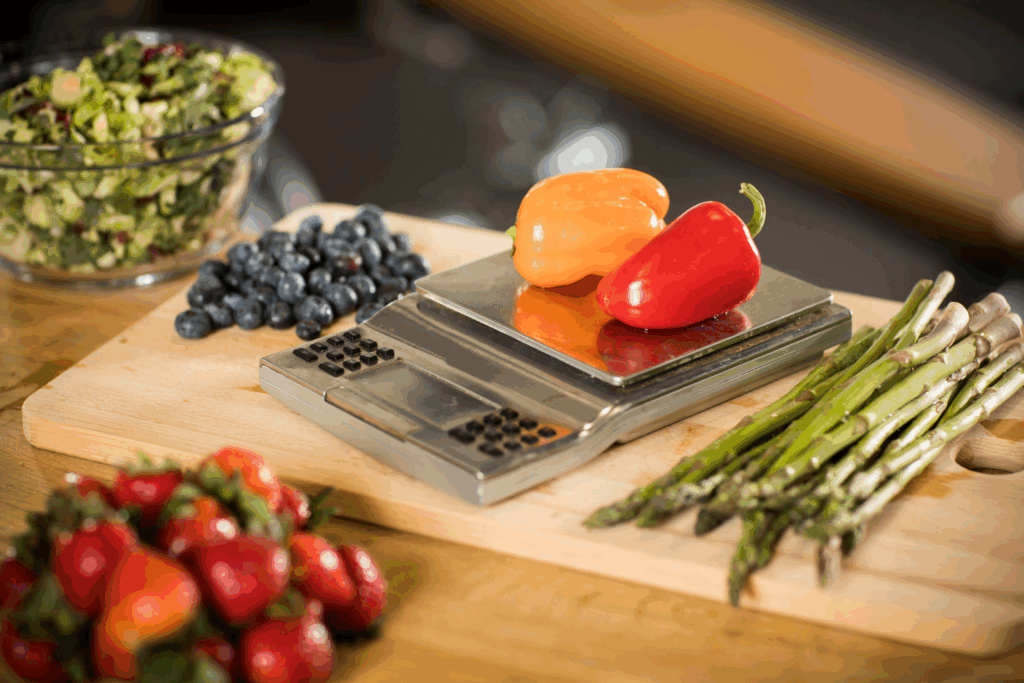
You’ll want to track everything you eat for a few weeks to get a feel for your habits. A food scale can help improve accuracy with portion sizes (especially with things like olive oil, nut butters, or protein powder). I remember the first week I tracked olive oil and peanut butter… and let’s just say, I was eyeballing way too generously. Using a food scale helped me reset my idea of portion sizes in a way that wasn’t restrictive — it was just eye-opening.
Tip: Don’t stress if you’re not perfect at first. The goal is to build awareness, not obsess.
Step 4: Use What You Learn to Make Adjustments
Tracking your macros isn’t about being perfect every single day. It’s about spotting patterns, understanding your body, and adjusting based on what you need.
Ask yourself:
- Am I hitting my protein goal consistently?
- Do I feel energized, satisfied, and focused?
- Am I seeing the results I want (weight, body fat, muscle tone)?
If not, tweak your macros. You might need to increase protein, reduce simple carbs, or add more fiber and leafy greens. When I first started tracking macros, I was shocked to realize how little protein I was actually getting. Just that awareness changed everything.

Common Mistakes to Avoid
Ignoring your protein intake (most people under-eat it!)
Relying too much on processed foods to hit your numbers
Not logging “hidden calories” (olive oil, sauces, snacks)
Thinking you have to be perfect — you don’t
What Should You Eat When Tracking Macros?
Here are a few go-to options by macro category:
Lean Proteins:
- Chicken breast, turkey, lean ground beef
- Greek yogurt, cottage cheese
- Protein powder
- Eggs and egg whites
Healthy Carbs:
- Brown rice, quinoa, sweet potatoes
- Berries, bananas, apples
- Oats, whole grains, legumes
Healthy Fats:
- Olive oil, avocado
- Almonds, walnuts, nut butters
- Chia seeds, flaxseeds, fatty fish
A balanced day might include a protein smoothie, chicken grain bowl, a Greek yogurt snack, and salmon with roasted veggies.
Sample Macro-Friendly Day (2,000 Calories)
| Meals | Foods | Protein | Carbs | Fats |
| Breakfast | Protein oats with banana + almond butter | 25g | 40g | 15g |
| Snack | Greek yogurt + blueberries | 20g | 15g | 5g |
| Lunch | Grilled chicken, rice, roasted veggies | 35g | 45g | 15g |
| Snack | Protein shake + apple | 30g | 25g | 3g |
| Dinner | Salmon, sweet potato, asparagus | 40g | 40g | 20g |
| Totals | ~150g protein | ~165g carbs | ~58g |
Is Macro Tracking Right for You?
Macro tracking is a powerful tool, but it isn’t for everyone. It’s best suited for those who:
- Want a structured but flexible eating style
- Like numbers or data-driven strategies
- Have specific goals like weight loss, muscle gain, or improving energy
If you have a history of eating disorders or a strained relationship with food, it may be better to focus on intuitive eating or work with a registered dietitian instead.
Macro Tracking is a Long-Term Tool
Macro tracking isn’t about being perfect — it’s about building awareness and making more informed food choices. Even tracking for just a few weeks can be eye-opening and help you:
- Understand portion sizes
- Spot nutritional gaps
- Hit your protein and calorie goals consistently
Whether you’re chasing fat loss, muscle gain, or simply better energy levels on a daily basis, learning to track macros gives you a flexible, sustainable framework that works long-term.
Want to take it a step further? Download my free high-protein meal prep guide or check out my 120g Protein Meal Plan to see macro tracking in action!
Let’s stay connected! Feel free to follow me on my social channels, instagram, Youtube and Pinterest!